
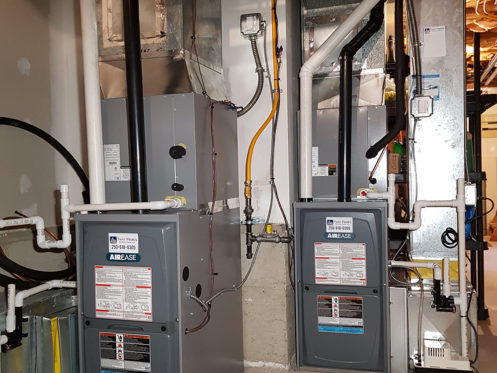
Two-Stage vs Single-Stage Furnace: Is the Extra Cost Worth It?
A two-stage furnace is worth the extra cost for most homeowners who want better comfort, quieter operation, and lower energy bills. Unlike single-stage furnaces that only run at full blast, two-stage furnaces can operate at a lower setting (usually around 65% capacity) most of the time. This means more consistent temperatures, less noise, and energy savings of 10-15% on average. While two-stage furnaces cost $500-$1,000 more upfront, they typically pay for themselves through energy savings and increased comfort over their 15-20 year lifespan.
| Feature | Single-Stage Furnace | Two-Stage Furnace |
|---|---|---|
| Operation Modes | One speed (100% capacity) | Two speeds (65% and 100% capacity) |
| Average Cost | $2,000-$3,500 | $2,500-$4,500 |
| Energy Efficiency | Lower | 10-15% higher |
| Temperature Consistency | More fluctuation | More consistent |
| Noise Level | Louder | Quieter |
| Best For | Budget-conscious, smaller homes | Comfort-focused, larger homes |
How Single-Stage Furnaces Work
A single-stage furnace is the most basic type of heating system. It has just one operating mode – full power. When your thermostat calls for heat, the furnace turns on at 100% capacity. When the desired temperature is reached, it shuts off completely.
Think of a single-stage furnace like a light switch that can only be fully on or fully off. There’s no in-between setting. This simple operation makes single-stage furnaces less expensive to buy and install.
Pros of Single-Stage Furnaces
- Lower upfront cost: Single-stage furnaces typically cost $500-$1,000 less than two-stage models.
- Simpler design: With fewer parts, these furnaces may have fewer things that can break down.
- Easier to repair: When problems do occur, repairs are often simpler and less expensive.
- Sufficient for mild climates: In areas with mild winters, the full-blast operation may not be a significant drawback.
Cons of Single-Stage Furnaces
- Temperature swings: These furnaces create more noticeable temperature fluctuations as they cycle on and off.
- Noisier operation: The full-blast operation creates more noise each time the furnace kicks on.
- Less energy efficient: Running at full capacity uses more energy, even when only a little heat is needed.
- Shorter run times: The furnace heats quickly at full power but then shuts off, creating more frequent cycling.
How Two-Stage Furnaces Work
A two-stage furnace has two operating modes – a lower setting (usually around 65% capacity) and full power (100% capacity). On milder days, the furnace runs on the lower setting. When temperatures drop significantly, it kicks into high gear.
Think of a two-stage furnace like a ceiling fan with low and high settings. Most of the time, the low setting is enough. But when you need more air circulation, you can switch to high.
Pros of Two-Stage Furnaces
- More consistent temperatures: Longer run times at lower capacity maintain more even temperatures throughout your home.
- Quieter operation: The lower setting runs more quietly than full-blast operation.
- Better energy efficiency: Running at lower capacity most of the time saves 10-15% on energy costs.
- Better air filtration: Longer run times mean more air passes through your filter, improving indoor air quality.
- More comfortable humidity levels: The steady operation helps maintain better humidity balance in winter.
Cons of Two-Stage Furnaces
- Higher upfront cost: Expect to pay $500-$1,000 more for a two-stage furnace.
- More complex design: Additional components mean more potential points of failure.
- More expensive repairs: When problems occur, repairs typically cost more.
- Overkill for rarely used spaces: The benefits may be less noticeable in vacation homes or spaces used infrequently.
Key Differences Between Two-Stage vs Single-Stage Furnaces
Comfort Comparison
The biggest difference you’ll notice between these furnace types is comfort. Single-stage furnaces create more temperature swings. They blast hot air until reaching the set temperature, then shut off completely until the temperature drops enough to trigger another cycle.
Two-stage furnaces run longer at a lower capacity. This creates a more steady, comfortable heat throughout your home. The temperature stays within 1-2 degrees of your thermostat setting, rather than swinging 3-5 degrees with a single-stage model.
Energy Efficiency Comparison
Two-stage furnaces are more energy efficient for two main reasons. First, they run at a lower capacity most of the time, using less fuel. Second, startup is when furnaces use the most energy, and two-stage models have fewer startups because they run longer cycles.
Most homeowners see 10-15% energy savings with a two-stage furnace compared to a single-stage model. This can add up to significant savings over the 15-20 year lifespan of the furnace.
Noise Level Comparison
If peace and quiet matter to you, a two-stage furnace has a clear advantage. Single-stage furnaces make more noise because they always operate at full blast. The sudden whoosh of air and rumble of the furnace can be disruptive, especially in smaller homes.
Two-stage furnaces run at the lower setting most of the time. This quieter operation means you’re less likely to notice when your furnace is running. Many homeowners appreciate this, especially in open floor plans where the furnace noise can carry throughout the home.
Airflow and Air Quality Comparison
Better airflow is another benefit of two-stage furnaces. The longer run times mean air is constantly circulating through your home. This helps eliminate hot and cold spots that are common with single-stage furnaces.
Air quality improves with a two-stage furnace too. More air passing through your filter means more dust, allergens, and other particles get trapped. If anyone in your home has allergies or respiratory issues, this can be a significant benefit.
Is a Two-Stage Furnace Worth the Extra Money?
Long-Term Energy Savings
While the upfront cost is higher, a two-stage furnace can save you money over time. With 10-15% energy savings, most homeowners recoup the extra cost within 5-7 years through lower utility bills.
For example, if your winter heating bills average $200 per month over a 5-month heating season, that’s $1,000 annually. A 15% savings would be $150 per year. Over a 15-year furnace lifespan, that’s $2,250 in savings – more than covering the extra upfront cost.
Maintenance and Repair Costs
Both furnace types need regular maintenance, but two-stage furnaces may have slightly higher repair costs when problems occur. The additional components create more potential points of failure.
However, many homeowners find that two-stage furnaces actually have fewer problems overall. The lower-capacity operation puts less strain on components most of the time, potentially extending the system’s lifespan.
Who Should Choose a Two-Stage Furnace?
A two-stage furnace is an especially good choice if:
- You live in an area with cold winters where your furnace runs frequently
- Your home has multiple levels or open floor plans where temperature consistency is challenging
- You plan to stay in your home for at least 5+ years to recoup the investment
- Energy efficiency and lower utility bills are priorities for you
- You’re sensitive to noise or temperature fluctuations
- Someone in your home has allergies or respiratory issues that benefit from better air filtration
Who Should Choose a Single-Stage Furnace?
A single-stage furnace might be the better option if:
- You’re on a tight budget and upfront cost is your main concern
- You live in a mild climate where heating needs are minimal
- You have a smaller home where temperature consistency is less of an issue
- You’re planning to move within the next few years
- You’re replacing a furnace in a rental property where premium features are less important
Beyond Two-Stage: What About Modulating Furnaces?
If you’re considering a two-stage furnace, you might also hear about modulating furnaces. These are the top tier of furnace technology, offering even more precise temperature control.
Modulating furnaces can adjust their output in increments as small as 1%, operating anywhere from 40% to 100% capacity. This provides the ultimate in comfort and efficiency, with even temperature maintenance within half a degree of your thermostat setting.
However, modulating furnaces come with a premium price tag, a little bit more than two-stage models. For most homeowners, a two-stage furnace hits the sweet spot of improved comfort and efficiency without the highest-tier cost.
Frequently Asked Questions About Two-Stage vs Single-Stage Furnaces
How much more efficient is a two-stage furnace?
A two-stage furnace is typically 10-15% more efficient than a comparable single-stage model. The efficiency gains come from running at lower capacity most of the time and having fewer energy-intensive startup cycles.
How long do two-stage furnaces last?
Both single-stage and two-stage furnaces typically last 15-20 years with proper maintenance. Some homeowners report that two-stage furnaces may last slightly longer because they run at lower capacity most of the time, creating less wear and tear on components.
Can I upgrade my single-stage furnace to a two-stage?
No, you cannot convert a single-stage furnace to a two-stage model. The differences involve core components like the gas valve and control board. If you want two-stage operation, you’ll need to replace your furnace entirely.
Will a two-stage furnace work with my existing thermostat?
Most two-stage furnaces will work with standard thermostats, but you’ll get the most benefit from a thermostat designed for two-stage operation. Your HVAC professional can recommend compatible options during installation.
Are two-stage furnaces harder to maintain?
Two-stage furnaces require the same regular maintenance as single-stage models – annual inspections and filter changes. While they have more complex components, routine maintenance tasks remain similar.
Making the Right Choice for Your Home
Choosing between a two-stage and single-stage furnace comes down to balancing your budget against your comfort priorities. For most homeowners who plan to stay in their homes for at least 5 years, a two-stage furnace provides enough benefits in comfort, quiet operation, and energy savings to justify the higher upfront cost.
Remember that your home’s size, layout, and your local climate all affect how noticeable the benefits will be. In larger homes with multiple levels or open floor plans, the improved temperature consistency of a two-stage furnace makes a bigger difference.
When making your decision, consider getting quotes for both options from qualified HVAC professionals. They can provide specific recommendations based on your home’s heating needs and help you understand the exact cost difference for your situation.
Ready to upgrade your home’s heating system? Contact Twin Peaks Plumbing, Heating, and Air for a free consultation. Our experts can help you choose the perfect furnace for your comfort needs and budget, and provide professional installation to ensure optimal performance for years to come.

